Amazon

October 31, 2016

EFFECT OF ALCOHOL ON THE MEMBRANES.


The parts which first suffer from alcohol are those expansions of the body which the anatomists call the membranes. "The skin is a membranous envelope. Through the whole of the alimentary surface, from the lips downward, and through the bronchial passages to their minutest ramifications, extends the mucous membrane. The lungs, the heart, the liver, the kidneys are folded in delicate membranes, which can be stripped easily from these parts. If you take a portion of bone, you will find it easy to strip off from it a membranous sheath or covering; if you examine a joint, you will find both the head and the socket lined with membranes. 

The whole of the intestines are enveloped in a fine membrane called  peritoneum . All the muscles are enveloped in membranes, and the fasciculi, or bundles and fibres of muscles, have their membranous sheathing. The brain and spinal cord are enveloped in three membranes; one nearest to themselves, a pure vascular structure, a network of blood-vessels; another, a thin serous structure; a third, a strong fibrous structure. The eyeball is a structure of colloidal humors and membranes, and of nothing else. To complete the description, the minute structures of the vital organs are enrolled in membranous matter." 

These membranes are the filters of the body. "In their absence there could be no building of structure, no solidification of tissue, nor organic mechanism. Passive themselves, they, nevertheless, separate all structures into their respective positions and adaptations." 

Membranous deteriorations.
------------------------- 

In order to make perfectly clear to your mind the action and use of these membranous expansions, and the way in which alcohol deteriorates them, and obstructs their work, we quote again from Dr. Richardson: 

"The animal receives from the vegetable world and from the earth the food and drink it requires for its sustenance and motion. It receives colloidal food for its muscles: combustible food for its motion; water for the solution of its various parts; salt for constructive and other physical purposes. These have all to be arranged in the body; and they are arranged by means of the membranous envelopes. Through these membranes nothing can pass that is not, for the time, in a state of aqueous solution, like water or soluble salts. Water passes freely through them, salts pass freely through them, but the constructive matter of the active parts that is colloidal does not pass; it is retained in them until it is chemically decomposed into the soluble type of matter. When we take for our food a portion of animal flesh, it is first resolved, in digestion, into a soluble fluid before it can be absorbed; in the blood it is resolved into the fluid colloidal condition; in the solids it is laid down within the membranes into new structure, and when it has played its part, it is digested again, if I may so say, into a crystalloidal soluble substance, ready to be carried away and replaced by addition of new matter, then it is dialysed or passed through, the membranes into the blood, and is disposed of in the excretions. 

"See, then, what an all-important part these membranous structures play in the animal life. Upon their integrity all the silent work of the building up of the body depends. If these membranes are rendered too porous, and let out the colloidal fluids of the blood the albumen, for example the body so circumstanced, dies; dies as if it were slowly bled to death. If, on the contrary, they become condensed or thickened, or loaded with foreign material, then they fail to allow the natural fluids to pass through them. They fail to dialyse, and the result is, either an accumulation of the fluid in a closed cavity, or contraction of the substance inclosed within the membrane, or dryness of membrane in surfaces that ought to be freely lubricated and kept apart. In old age we see the effects of modification of membrane naturally induced; we see the fixed joint, the shrunken and feeble muscle, the dimmed eye, the deaf ear, the enfeebled nervous function. 


"It may possibly seem, at first sight, that I am leading immediately away from the subject of the secondary action of alcohol. It is not so. I am leading directly to it. Upon all these membranous structures alcohol exerts a direct perversion of action. It produces in them a thickening, a shrinking and an inactivity that reduces their functional power. That they may work rapidly and equally, they require to be at all times charged with water to saturation. If, into contact with them, any agent is brought that deprives them of water, then is their work interfered with; they cease to separate the saline constituents properly; and, if the evil that is thus started, be allowed to continue, they contract upon their contained matter in whatever organ it may be situated, and condense it. 

"In brief, under the prolonged influence of alcohol those changes which take place from it in the blood corpuscles, extend to the other organic parts, involving them in structural deteriorations, which are always dangerous, and are often ultimately fatal."

EFFECT OF ALCOHOL ON THE BLOOD.


Dr. Richardson, in his lectures on alcohol, given both in England and America, speaking of the action of this substance on the blood after passing from the stomach, says: 

"Suppose, then, a certain measure of alcohol be taken into the stomach, it will be absorbed there, but, previous to absorption, it will have to undergo a proper degree of dilution with water, for there is this peculiarity respecting alcohol when it is separated by an animal membrane from a watery fluid like the blood, that it will not pass through the membrane until it has become charged, to a given point of dilution, with water. It is itself, in fact,  so greedy for water, it will pick it up from watery textures, and deprive them of it until, by its saturation, its power of reception is exhausted , after which it will diffuse into the current of circulating fluid." 

It is this power of absorbing water from every texture with which alcoholic spirits comes in contact, that creates the burning thirst of those who freely indulge in its use. Its effect, when it reaches the circulation, is thus described by Dr. Richardson: 

"As it passes through the circulation of the lungs it is exposed to the air, and some little of it, raised into vapor by the natural heat, is thrown off in expiration. If the quantity of it be large, this loss may be considerable, and the odor of the spirit may be detected in the expired breath. If the quantity be small, the loss will be comparatively little, as the spirit will be held in solution by the water in the blood. After it has passed through the lungs, and has been driven by the left heart over the arterial circuit, it passes into what is called the minute circulation, or the structural circulation of the organism. The arteries here extend into very small vessels, which are called arterioles, and from these infinitely small vessels spring the equally minute radicals or roots of the veins, which are ultimately to become the great rivers bearing the blood back to the heart. 

In its passage through this minute circulation the alcohol finds its way to every organ. To this brain, to these muscles, to these secreting or excreting organs, nay, even into this bony structure itself, it moves with the blood. In some of these parts which are not excreting, it remains for a time diffused, and in those parts where there is a large percentage of water, it remains longer than in other parts. From some organs which have an open tube for conveying fluids away, as the liver and kidneys, it is thrown out or eliminated, and in this way a portion of it is ultimately removed from the body. The rest passing round and round with the circulation, is probably decomposed and carried off in new forms of matter. 


"When we know the course which the alcohol takes in its passage through the body, from the period of its absorption to that of its elimination, we are the better able to judge what physical changes it induces in the different organs and structures with which it comes in contact. It first reaches the blood; but, as a rule, the quantity of it that enters is insufficient to produce any material effect on that fluid. If, however, the dose taken be poisonous or semi-poisonous, then even the blood, rich as it is in water and it contains seven hundred and ninety parts in a thousand is affected. 

The alcohol is diffused through this water, and there it comes in contact with the other constituent parts, with the fibrine, that plastic substance which, when blood is drawn, clots and coagulates, and which is present in the proportion of from two to three parts in a thousand; with the albumen which exists in the proportion of seventy parts; with the salts which yield about ten parts; with the fatty matters; and lastly, with those minute, round bodies which float in myriads in the blood (which were discovered by the Dutch philosopher, Leuwenhock, as one of the first results of microscopical observation, about the middle of the seventeenth century), and which are called the blood globules or corpuscles. These last-named bodies are, in fact, cells; their discs, when natural, have a smooth outline, they are depressed in the centre, and they are red in color; the color of the blood being derived from them. 

We have discovered that there exist other corpuscles or cells in the blood in much smaller quantity, which are called white cells, and these different cells float in the blood-stream within the vessels. The red take the centre of the stream; the white lie externally near the sides of the vessels, moving less quickly. Our business is mainly with the red corpuscles. They perform the most important functions in the economy; they absorb, in great part, the oxygen which we inhale in breathing, and carry it to the extreme tissues of the body; they absorb, in great part, the carbonic acid gas which is produced in the combustion of the body in the extreme tissues, and bring that gas back to the lungs to be exchanged for oxygen there; in short, they are the vital instruments of the circulation. 

"With all these parts of the blood, with the water, fibrine, albumen, salts, fatty matter and corpuscles, the alcohol comes in contact when it enters the blood, and, if it be in sufficient quantity, it produces disturbing action. I have watched this disturbance very carefully on the blood corpuscles; for, in some animals we can see these floating along during life, and we can also observe them from men who are under the effects of alcohol, by removing a speck of blood, and examining it with the microscope. The action of the alcohol, when it is observable, is varied. It may cause the corpuscles to run too closely together, and to adhere in rolls; it may modify their outline, making the clear-defined, smooth, outer edge irregular or crenate, or even starlike; it may change the round corpuscle into the oval form, or, in very extreme cases, it may produce what I may call a truncated form of corpuscles, in which the change is so great that if we did not trace it through all its stages, we should be puzzled to know whether the object looked at were indeed a blood-cell. 

All these changes are due to the action of the spirit upon the water contained in the corpuscles; upon the capacity of the spirit to extract water from them. During every stage of modification of corpuscles thus described, their function to absorb and fix gases is impaired, and when the aggregation of the cells, in masses, is great, other difficulties arise, for the cells, united together, pass less easily than they should through the minute vessels of the lungs and of the general circulation, and impede the current, by which local injury is produced. 

"A further action upon the blood, instituted by alcohol in excess, is upon the fibrine or the plastic colloidal matter. On this the spirit may act in two different ways, according to the degree in which it affects the water that holds the fibrine in solution. It may fix the water with the fibrine, and thus destroy the power of coagulation; or it may extract the water so determinately as to produce coagulation." 

ALCOHOL HAS NO FOOD VALUE.


Alcohol has no food value and is exceedingly limited in its action as a remedial agent. Dr. Henry Monroe says, "every kind of substance employed by man as food consists of sugar, starch, oil and glutinous matter mingled together in various proportions. These are designed for the support of the animal frame. The glutinous principles of food fibrine, albumen and casein are employed to build up the structure while the oil, starch and sugar are chiefly used to generate heat in the body". 

Now it is clear that if alcohol is a food, it will be found to contain one or more of these substances. There must be in it either the nitrogenous elements found chiefly in meats, eggs, milk, vegetables and seeds, out of which animal tissue is built and waste repaired or the carbonaceous elements found in fat, starch and sugar, in the consumption of which heat and force are evolved. 

"The distinctness of these groups of foods," says Dr. Hunt, "and their relations to the tissue-producing and heat-evolving capacities of man, are so definite and so confirmed by experiments on animals and by manifold tests of scientific, physiological and clinical experience, that no attempt to discard the classification has prevailed. To draw so straight a line of demarcation as to limit the one entirely to tissue or cell production and the other to heat and force production through ordinary combustion and to deny any power of interchangeability under special demands or amid defective supply of one variety is, indeed, untenable. This does not in the least invalidate the fact that we are able to use these as ascertained landmarks". 

How these substances when taken into the body, are assimilated and how they generate force, are well known to the chemist and physiologist, who is able, in the light of well-ascertained laws, to determine whether alcohol does or does not possess a food value. For years, the ablest men in the medical profession have given this subject the most careful study, and have subjected alcohol to every known test and experiment, and the result is that it has been, by common consent, excluded from the class of tissue-building foods. "We have never," says Dr. Hunt, "seen but a single suggestion that it could so act, and this a promiscuous guess. One writer (Hammond) thinks it possible that it may 'somehow' enter into combination with the products of decay in tissues, and 'under certain circumstances might yield their nitrogen to the construction of new tissues.' No parallel in organic chemistry, nor any evidence in animal chemistry, can be found to surround this guess with the areola of a possible hypothesis". 


Dr. Richardson says: "Alcohol contains no nitrogen; it has none of the qualities of structure-building foods; it is incapable of being transformed into any of them; it is, therefore, not a food in any sense of its being a constructive agent in building up the body." Dr. W.B. Carpenter says: "Alcohol cannot supply anything which is essential to the true nutrition of the tissues." Dr. Liebig says: "Beer, wine, spirits, etc., furnish no element capable of entering into the composition of the blood, muscular fibre, or any part which is the seat of the principle of life." Dr. Hammond, in his Tribune Lectures, in which he advocates the use of alcohol in certain cases, says: "It is not demonstrable that alcohol undergoes conversion into tissue." Cameron, in his Manuel of Hygiene, says: "There is nothing in alcohol with which any part of the body can be nourished." Dr. E. Smith, F.R.S., says: "Alcohol is not a true food. It interferes with alimentation." Dr. T.K. Chambers says: "It is clear that we must cease to regard alcohol, as in any sense, a food". 

"Not detecting in this substance," says Dr. Hunt, "any tissue-making ingredients, nor in its breaking up any combinations, such as we are able to trace in the cell foods, nor any evidence either in the experience of physiologists or the trials of alimentarians, it is not wonderful that in it we should find neither the expectancy nor the realization of constructive power." 

Not finding in alcohol anything out of which the body can be built up or its waste supplied, it is next to be examined as to its heat-producing quality. 

Production of heat.
------------------           

"The first usual test for a force-producing food," says Dr. Hunt, "and that to which other foods of that class respond, is the production of heat in the combination of oxygen therewith. This heat means vital force, and is, in no small degree, a measure of the comparative value of the so-called respiratory foods. If we examine the fats, the starches and the sugars, we can trace and estimate the processes by which they evolve heat and are changed into vital force, and can weigh the capacities of different foods. We find that the consumption of carbon by union with oxygen is the law, that heat is the product, and that the legitimate result is force, while the result of the union of the hydrogen of the foods with oxygen is water. If alcohol comes at all under this class of foods, we rightly expect to find some of the evidences which attach to the hydrocarbons." 

What, then, is the result of experiments in this direction? They have been conducted through long periods and with the greatest care, by men of the highest attainments in chemistry and physiology, and the result is given in these few words, by Dr. H.R. Wood, Jr., in his Materia Medica. "No one has been able to detect in the blood any of the ordinary results of its oxidation." That is, no one has been able to find that alcohol has undergone combustion, like fat, or starch, or sugar, and so given heat to the body.  

Alcohol and reduction of temperature.
------------------------------------                    

instead of increasing it; and it has even been used in fevers as an anti-pyretic. So uniform has been the testimony of physicians in Europe and America as to the cooling effects of alcohol, that Dr. Wood says, in his Materia Medica, "that it does not seem worth while to occupy space with a discussion of the subject." Liebermeister, one of the most learned contributors to Zeimssen's Cyclopaedia of the Practice of Medicine, 1875, says: "I long since convinced myself, by direct experiments, that alcohol, even in comparatively large doses, does not elevate the temperature of the body in either well or sick people." So well had this become known to Arctic voyagers, that, even before physiologists had demonstrated the fact that alcohol reduced, instead of increasing, the temperature of the body, they had learned that spirits lessened their power to withstand extreme cold. "In the Northern regions," says Edward Smith, "it was proved that the entire exclusion of spirits was necessary, in order to retain heat under these unfavorable conditions." 

Alcohol does not make you strong.
--------------------------------                  

If alcohol does not contain tissue-building material, nor give heat to the body, it cannot possibly add to its strength. "Every kind of power an animal can generate," says Dr. G. Budd, F.R.S., "the mechanical power of the muscles, the chemical (or digestive) power of the stomach, the intellectual power of the brain accumulates through the nutrition of the organ on which it depends." Dr. F.R. Lees, of Edinburgh, after discussing the question, and educing evidence, remarks: "From the very nature of things, it will now be seen how impossible it is that alcohol can be strengthening food of either kind. Since it cannot become a part of the body, it cannot consequently contribute to its cohesive, organic strength, or fixed power; and, since it comes out of the body just as it went in, it cannot, by its decomposition, generate heat force." 

Sir Benjamin Brodie says: "Stimulants do not create nervous power; they merely enable you, as it were, to  use up  that which is left, and then they leave you more in need of rest than before." 

Baron Liebig, so far back as 1843, in his "Animal Chemistry," pointed out the fallacy of alcohol generating power. He says: "The circulation will appear accelerated at the expense of the force available for voluntary motion, but without the production of a greater amount of mechanical force." In his later "Letters," he again says: "Wine is quite superfluous to man, it is constantly followed by the expenditure of power" whereas, the real function of food is to give power. He adds: "These drinks promote the change of matter in the body, and are, consequently, attended by an inward loss of power, which ceases to be productive, because it is not employed in overcoming outward difficulties i.e., in working." In other words, this great chemist asserts that alcohol abstracts the power of the system from doing useful work in the field or workshop, in order to cleanse the house from the defilement of alcohol itself. 

The late Dr. W. Brinton, Physician to St. Thomas', in his great work on Dietetics, says: "Careful observation leaves little doubt that a moderate dose of beer or wine would, in most cases, at once diminish the maximum weight which a healthy person could lift. Mental acuteness, accuracy of perception and delicacy of the senses are all so far opposed by alcohol, as that the maximum efforts of each are incompatible with the ingestion of any moderate quantity of fermented liquid. A single glass will often suffice to take the edge off both mind and body, and to reduce their capacity to something below their perfection of work." 

Dr. F.R. Lees, F.S.A., writing on the subject of alcohol as a food, makes the following quotation from an essay on "Stimulating Drinks," published by Dr. H.R. Madden, as long ago as 1847: "Alcohol is not the natural stimulus to any of our organs, and hence, functions performed in consequence of its application, tend to debilitate the organ acted upon. 

Alcohol is incapable of being assimilated or converted into any organic proximate principle, and hence, cannot be considered nutritious. 

The strength experienced after the use of alcohol is not new strength added to the system, but is manifested by calling into exercise the nervous energy pre-existing. 

The ultimate exhausting effects of alcohol, owing to its stimulant properties, produce an unnatural susceptibility to morbid action in all the organs, and this, with the plethora superinduced, becomes a fertile source of disease. 

A person who habitually exerts himself to such an extent as to require the daily use of stimulants to ward off exhaustion, may be compared to a machine working under high pressure. He will become much more obnoxious to the causes of disease, and will certainly break down sooner than he would have done under more favorable circumstances. 

The more frequently alcohol is had recourse to for the purpose of overcoming feelings of debility, the more it will be required, and by constant repetition a period is at length reached when it cannot be foregone, unless reaction is simultaneously brought about by a temporary total change of the habits of life. 

Driven to the wall.
------------------ 

Not finding that alcohol possesses any direct alimentary value, the medical advocates of its use have been driven to the assumption that it is a kind of secondary food, in that it has the power to delay the metamorphosis of tissue. "By the metamorphosis of tissue is meant," says Dr. Hunt, "that change which is constantly going on in the system which involves a constant disintegration of material; a breaking up and avoiding of that which is no longer aliment, making room for that new supply which is to sustain life." Another medical writer, in referring to this metamorphosis, says: "The importance of this process to the maintenance of life is readily shown by the injurious effects which follow upon its disturbance. If the discharge of the excrementitious substances be in any way impeded or suspended, these substances accumulate either in the blood or tissues, or both. In consequence of this retention and accumulation they become poisonous, and rapidly produce a derangement of the vital functions. Their influence is principally exerted upon the nervous system, through which they produce most frequent irritability, disturbance of the special senses, delirium, insensibility, coma, and finally, death." 

"This description," remarks Dr. Hunt, "seems almost intended for alcohol." He then says: "To claim alcohol as a food because it delays the metamorphosis of tissue, is to claim that it in some way suspends the normal conduct of the laws of assimilation and nutrition, of waste and repair. A leading advocate of alcohol (Hammond) thus illustrates it: 'Alcohol retards the destruction of the tissues. By this destruction, force is generated, muscles contract, thoughts are developed, organs secrete and excrete.' In other words, alcohol interferes with all these. No wonder the author 'is not clear' how it does this, and we are not clear how such delayed metamorphosis recuperates.  

Not an originator of vital force.
-------------------------------- 

which is not known to have any of the usual power of foods, and use it on the double assumption that it delays metamorphosis of tissue, and that such delay is conservative of health, is to pass outside of the bounds of science into the land of remote possibilities, and confer the title of adjuster upon an agent whose agency is itself doubtful.  

Having failed to identify alcohol as a nitrogenous or non-nitrogenous food, not having found it amenable to any of the evidences by which the food-force of aliments is generally measured, it will not do for us to talk of benefit by delay of regressive metamorphosis unless such process is accompanied with something evidential of the fact something scientifically descriptive of its mode of accomplishment in the case at hand, and unless it is shown to be practically desirable for alimentation. 

There can be no doubt that alcohol does cause  defects  in the processes of elimination which are natural to the healthy body and which even in disease are often conservative of health.

How to rebuild your life, learn divorce laws


Divorce can be messy and difficult. You do not want to have a lawyer that never calls you or that never communicates with you. Before you hire a lawyer, you may want to look up some of your state divorce laws so that you have a better understanding of the situation. You need to find legal representation and ask your lawyer about certain laws that you can file under. You will need to know what may prevent you from getting what you deserve like a pre-nup. You should also refer to other cases so that you know what to expect. Sometimes your lawyer may sugar coat the situation, but if you are able to identify some of the things that could help your case, your attorney is also more likely to let you know the truth. They will think that you have some general knowledge of the laws and if you are prepared your lawyer will be straight and honest with you.

If you plan on having a huge divorce worth a lot than you will want to go with a firm to represent you. You can also help your lawyer prepare by telling them some things that may be used against your spouse and also be doing research. If you stumble across a law that can be used to your advantage then you are more likely to win because it might be something that your lawyer never thought of. 

If you cannot afford a decent lawyer than you will need to hire a bono lawyer. They have limited knowledge and resources. They may not know the law as well and may want to just settle. If you learn how to investigate, your own divorce than you should be able to tell your pro-bono lawyer to build the case against your spouse and then you will be more likely to get what you deserve in the case. 

You should also research the laws for quick settlements. Once you get a quick deed, then it cannot be undone and you may end up with less than what you started the process with. You should know that there are tax payments that would be paid. Each state has certain laws when it comes to the quick divorce. You will also need to research any other taxes or fees that may be paid for things like property or the interest of property.

To do the proper research you may want to ask your lawyer what you should do and how you can help. You can also go online and begin to search for cases and laws that may be helpful t you. You will want to make sure that you keep all financial records that were saved during the marriage. This way you know what everything was paid and how much the depreciation of such goods would be. This will be a big help while going through the divorce.

If you have children, you will have to research a lot of the state laws. This way you know exactly what the chances of you getting full custody are and what shared custody means. You will also want to check to see what the parent's limits are. You may not be able to take children out of the state during a divorce, so you will want to know what you can do, as well as, what your spouse and do within the limits of the law. You will also want to know what you can do legally to obtain information and when things need to be files so you know exactly what's going on in your divorce process.

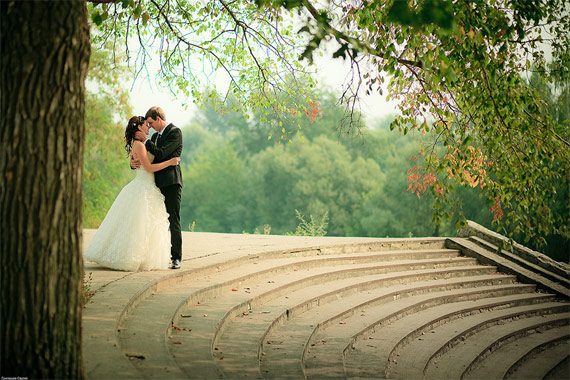
A Guide to Professional Styles and Techniques in the Art of Digital Wedding Photography


When people get sentimental, they usually flip albums and look at the pictures that depict the things that happened in their lives. These pictures are not simply pieces of colored papers with images for they can trigger deeply-seated emotions. Emotions vary depending on the memories attached to these images seen and preserved.

One of the moments that most people would really love to preserve is the tick of events on their wedding day. 

For this reason, people even decide to hire professional photographers to capture the important moments of their lives. However, these photographers may not always advise the client to strike a pose. They are expected to wait patiently to be able to catch memorable portraits. Most photographers that are employed for weddings have assistants so that they can maximize their strategy in creating an album that will not regrettable.   

What if you would also want to take pictures of a friend’s wedding? 

Here are a few basic techniques and styles for anyone who wants to capture the said event using a digital camera:

1. If you want to take a picture of a couple or any intended target, make sure that the background is good and the environment is not so crowded. 
2. If there is a nice background but it is hard to focus on the couple, you may shoot them from shoulder up. 
3. If some of the guests are wearing glasses, they can be advised to stand tilt their heads a little down or sideways to avoid the glaring effect that normally appears when the flash is used.
4. If there is a couple or a group that you wish to include in the picture, you should zoom in or out of the picture.
5. You must not shoot a couple or any guest against the light so that dark images will not appear
6. Candid shots are also dramatic. These portraits reveal more than the quality of the picture itself. In fact, many professionals do this to capture intimate and memorable moments.
7.   You should be alert at all times since you can seldom ask individuals to pose 
      again for you.
8. Your digital camera should be equipped with appropriate memory cards or sticks to ensure that no great moment is missed.


In other words, you have to have an extra memory card especially when you want more moments to preserve. The following suggestions should be considered before buying a memory card:

a. for 3 mega pixels – a 256 MB memory card
b. for 4 mega pixels – a 512 MB memory card
c. for 6 mega pixels – 1 gigabyte memory card 

9. You are not advised to use low resolutions if the images will be displayed and 
      hung later.

Just always remember that the higher the resolution utilized, the larger the size of prints that can be made.

10. Keep a copy of your best works so you can use and reuse the techniques that 
  made your viewers smile and appreciate your creation more. 

You can do this by saving albums on your personal computer to free up the space in your memory card. You may also use other software to enhance the quality of the prints to be made.

Photography is truly a wonderful art. Wedding is a wonderful event. The union of these things will trigger emotions and memories in the long run more so if images are captured and preserved well. They all depend on your camera and your love for this art and the couple.

Who are you? A Spiritual Awakening


Who are you? A spiritual awakening now will help you answer that question. We have asked that same query repeatedly in the course of our lives, often having answers that dwell on the basic and the more obvious. Who are you? I am an employee, a clerk in the bank, a teacher, an engineer, a scientist or a businessman. But that question is a loaded one and requires an answer beyond what we do in our lives. It can be approached as a philosophical question where the answer would require looking more closely and deeply into one’s self. 

To achieve an awakening, one might have to go into deep meditation. Others might suggest a different approach though. It is still meditation but more of an involved observation. Observing closely the inner workings of your mind would be a different approach but can be as effective as meditation. Being a third party observer to your thoughts could be a good exercise of separating yourself from your own thoughts which can lead to discerning who you really are. You might find this concept a little different or even outwardly weird. But still there’s no harm in trying though since you’re in the process of knowing yourself, giving different means or techniques a shot is not that bad. 

Techniques may vary but what is important is that you are meditating on what is happening on the now. The realization will not come if you keep thinking of the past or paying too much attention to the future. Thinking, meditating and concentrating on your thoughts at this very minute or second would be the right way to go. You don’t think about past exploits, former employments, the days during those college years, and all that stuff during meditation. You think of the present, you think why you exist right now. You observe what you are at that moment and enlightenment might come quickly to some or might take some time to others. You might need more patience and keep trying to get something out of the exercise. 

Others, however, would insist on leaving everything as they come and dealing with them as they enter your consciousness. All those things are part of your existence. Resisting them is like resisting part of yourself. These things are happening now and not paying much attention to them does not really help. This is why other people insist on not blocking those emotions. Living in the moment means not trying to change. 

The thing is it to continue feeling peaceful. Remember the moment and keep coming back to that moment. That will be your base for your meditation. Always remember to leave everything behind and always pay attention to the moment. I may have said this over and over again but the fact of the matter is you need to always pay attention to the moment. If you suddenly found yourself drifting from your meditation, go back to that moment where you are at peace. Just be there at that moment and do not worry if you’re doing everything right or wrong. 

So we go back to that question of who are you? A spiritual awakening is indeed the answer but it might not come instantly to others while it comes immediately to others. You just need to be patient if you belong to the group that enlightenment does not come easily.

October 30, 2016

The Obesity Solution Secret: How to Eat To Lose Fat

I used to interview elite bodybuilders on their training and eating for a living and did this for years and years. One reoccurring theme that kept popping up when talk turned to diet/nutrition was how much food top bodybuilders packed away on a daily basis. These men taught their bodies how to handle continually greater amounts of calories without becoming fat. Contrast this with the typical obese person who eats one meal a day and adds body fat at the drop of a hat. I am working with a crew of obese folks and having great success using modified bodybuilder eating tactics to help the obese lose body fat.


The first order of business for the obese is to establish a multiple meal schedule. The obvious advantage to this strategy is it divides the daily calories in smaller chunks. I require the obese person to eat every three hours and this usually works out to five feedings a day. Secondly we insist they clean up the food selections. Some foods are easily converted into body fat (sugar foods, manmade foods and saturated fat) and some foods are near impossible for the body to convert into fat (lean protein, fibrous carbohydrates). The bodyís metabolism kicks into high gear to digest protein and fiber ñ creates what is called the thermogenic effect of food. Body temperature actually increases when the digestive system is faced with the daunting task of breaking down hard to digest protein and fiber.

Multiple meals allow the body to deal with fewer calories at any one sitting and the repeated practice of eating 5-6 meals a day teaches the body to become adept at digesting and distributing food. Better to eat 3,000 ìcleanî calories a day divided into six five hundred-calorie daily meals than one 1,500 calorie mega-dirty fast-food meal.


The results are astounding when the obese buy into the approach. I have one male who has lost 40-pounds of bodyweight in 40 days while simultaneously adding 12-pounds of muscle. He started at 240 and yesterday he weighed 200. This is far more impressive because didnít lose muscle in the process, he added muscle in the process. This was no ex-jock loaded with muscle memory; this is a 48-year old man with zero weight training experience.

Obese folks who slash calories end up losing as much fat as muscle and end up as miniaturized versions of the old fat selves. This modified bodybuilder approach melts fat while simultaneously adding muscle: the obese person eats more and as a direct result feels energized and vibrant during the process. Contrast this with the calorie-slasher who feels deprived, denied and continually on the verge of a binge. A person who eats wholesome foods every three hours is far less likely to binge and blow their diet than some poor obese person subsisting on 1200 calories a day. The calorie starved obese individual has set their caloric ceiling set so low that eating a candy bar or a bowl of ice cream causes them to add five pounds in 24-hours.

Adding functional muscle and building strength allows the obese person to become mobile and adept at climbing steps, getting out of a low chair and powering their bulk around. Compare this to the calorie-slasher who actually weakens their already weak body. Those who depend on deprivation to trigger bodyweight loss weaken the immune system and continually contract colds and sickness.


Those who live on 1000 to 1500 calories a day live in a stressful psychological world of denial. A person who has elevated their metabolism and consumes 3,000 calories a day can absorb an occasional binge far, far better than a person starving; I allow my folks a cheat meal once a week: this allows them to feel psychologically free. The interesting thing about the cheat meal (not cheat day ñ cheat meal) is that by ìbeing goodî the other 6 7/8ís of the time the sweets, fat and junk they crave and might eat are rejected by the body and classically results in diarrhea.

I train five obese folks I currently work with -- one man and four women -- and all are experiencing similarly spectacular results: all are losing unhealthy fat while building functional muscle and eating more food than they did before they commenced the process. This counterintuitive approach ñ eat more to lose fat ñ was torn right out of the playbook of champion bodybuilders and can be used to great effect by anyone interested in losing fat while adding muscle.


The Different Coffee Variations And How To Make Them


Ok, so you like to down to your favourite coffee house and order coffees, cappuccinos, cafÈ mochas, lattes and espressos. It isnít the fancy coffee cups that make this beverage taste so great. 

Itís the recipe of the coffee and of course the way it looks that factors into the equation. We all have a favourite style of coffee and every cup will taste different because of the roast of the coffee bean, the grind, the amount used, the water, the temperature and a variety of other factors. 


We have all had a go trying to reproduce the coffee goodness from the coffee houses at home, the way we imagine they are supposed to be done, but do we actually know the proper method to use in order to extort the captivating flavours perfectly? Below is the basic list of how to make these excellent coffees.

Cappuccino: This coffee product consists of equal parts steamed and frothed milk and shot of coffee. The milk then gets poured on top of the coffee shot and dusted with nutmeg, cinnamon or chocolate powder. 

CafÈ Mochas: The easiest way to do this is to make it with quality hot chocolate, add a shot of coffee with steamed milk poured in and top with whipped cream, then lightly dust with chocolate powder. To achieve to best effect, use a clear glass-mug with a long stemmed spoon.. 

Lattes: Foam and steam milk to 75 degrees (C). The ratio is worked out as 50% coffee and 50% milk. Slowly pour the milk down the side of the coffee cup or glass so it infuses with the coffee shot. The main differentiation between a latte and a cappuccino is a latte blends the milk and coffee together, whereas the cappuccino keeps the 2 apart. 

Espressos: We have all had a foul espresso, right?. There are a number of reasons for this. The No.1 reason being an unfavourable coffee bean being used. If you like espressos you are most likely a lover of all things coffee and know what makes a good coffee bean. So with this in mind, to make a good espresso coffee you need to follow these instructions: 

* Finely grind the coffee beans 
* You must pack the espresso down firmly 
* You must use a high pressure coffee machine or stove top model 
* You must not try to make too much coffee at once 
* You must see the crËme floating on the top of the coffee shot, which is a golden-brown foam 
* You must use an appropriate espresso cup to keep the coffee warm


When all is said and done, making coffee correctly is all up to you and the way your flavour buds take to the coffee taste. If you like coffee in a particular way, then make it that particular way. However, if you have guests over they may just like the basics. So do yourself a favour and learn the correct way to make coffees, lattes and espressos.


Texas Hold'em Tournament - Learn How To Run A Texas Hold'em Tournament

Texas Hold'em is a popular game, so next time you consider hosting a social function at your house why not host a Texas Holdíem tournament? If that's not your thing, the following rules and information will help you better understand the way a Texas Hold'em tournament is run.

Blinds: Every Texas Hold'em tournament has a blinds structure. In a game, there are big blinds and small blinds, which are posted by the players to the left of the dealer button. There can also be another forced bet every player must post called the ante, which adds more action to the game. For instance, if the small blind is $5 and the big blind is $10 and the ante is $3, in a five player game there is already $30 in the pot at the start of a hand.


Limits: In Holdíem tournaments, even the World Series of Poker and the World Poker Tour, the limits increase as the game progresses. There are two things to decide in a tournament: how much the limits will be and how much they will increase. To determine the limits, make a chart that show the limits ñ the big blind, small blind and ante ñ at the beginning and at the first increase, second increase, third increase and son. The increments at which the limit increases can be either regulated by time or the number of hands.

Chips: You will also need to decide how many chips each person will receive and what they will represent. No one likes losing early on, so make the amount of chips fairly high in relation to the initial limit. If your first big blind is 15, then a good number of chips to start with is $1000. Even if the buy-in is only $5, the chips can represent a lot more.   

Rebuys or Addons: Rebuys are when you can purchase your buy-in again after you have run out of chips. This is usually only an available option near the beginning of a tournament for a limited period of time. A typical rebuy period could be within the first three limits and normally players can only rebuy one time. Addons are the same thing, but you donít have to be busted to get one. 

Multi Tables: If youíre going to have more than ten people, it is a good idea to have more than one table. Normally no limit holdíem is played with nine players and a dealer. This need not be the case at home. The dealer button and dealing responsibilities rotate and you likely wonít have a perfect number of people. Try and even out the number of people at each table, but donít predetermine where everyone will sit; that is unfair. Use chance.


Prize money: Decide on a payout structure for the player who wins. Usually the more entrants, the lower the payouts go down the ranks so that even if you finish 20th you walk away with something. If you have ten people, it is a good idea just to pay out the top winner or as many as the top three. If you have 20 people playing, pay out to the top five. The top winner should get the most and then the following winners should get less incrementally. 

Losing is boring: Donít let your losing guests get bored. Plan to start up a side game to keep people entertained. The buy-in doesnít matter and just give them a certain number of chips per dollar amount to play with.


The Airport Of Murcia And How To Get Around

Murica airport is an air base and civilian airport. The airport is not located in the city of Murica. It is located in San Javier, which is seventeen miles south of the city of Murica. The airport is operated by the Spanish airport authority. The runways are able to handle a variety of planes. The largest planes it can handle are Boeing 757 or 767 airplanes. 


The airport has grown in the past ten years from a very small operation to a much larger airport offering international flights. This growth has resulted in more choices in flights and airlines. The airport has gotten much more popular with tourists visiting the southern areas of the Costa Blanca. Many of these flights originate in the United Kingdom. 

Flights into Murica Airport

A variety of large and discount airlines fly into this airport from all over the world. Most of the travellers are visiting the southern area of the Costa Blanca, including Torrevieja. As the airport increases in popularity, airlines expand their offerings. This gives travellers more choice in flights and discount fares. 

A number of charter airlines use this airport. Itís a popular destination for charter groups. These are generally used by larger groups of people travelling together to the Costa Blanca region. A travel agent can help you with information about charter groups and airlines.

This airport is becoming busier recently. As a result more low cost airlines are operating at the airport. The passengers using this airport have increased ten fold since 1995. Currently, approximately 848,000 people fly into Murica each year. This number continues to grow each year.

In response to this increase in traffic, the terminal was expanded in 2004. The terminal now includes car hire companies, five new airport shops and additional luggage carousels. Further expansion is planned in the future. There is some talk about a new airport at some future point as demand continues to increase. 

Transportation from Murica Airport

Once you have arrived at the Murica airport, you will need to arrange for transportation to your final destination. There are not bus or train routes at the airport. You will need to arrange for a car hire, airport transfer or take a taxi. Itís best to think about the method of transportation you will use before you arrive in Murica. Car hire or airport transfer should be reserved in advance. 

You can arrange for a car hire at the airport. Four companies operate at the airport: Centuaro, Europa, Eurocar and Solmar. These are all located in the main terminal building. A car hire is a good choice for convenience and flexibility. Compare prices on the internet to get the best deal. Always reserve your car before you leave home to get the best deal and to ensure availability. 

Taxis are located outside the terminal building.  They are generally lined up waiting for passengers.  You may have to wait a short time for a taxi.  Murica isnít a large airport and the wait for a taxi generally isnít very long. Taxis can carry a maximum of four people, so plan accordingly. The cost depends on the destination. The further you are travelling the more expensive the fare. 

Airport transfers are the easiest and most cost effective way to travel. Transfers are available to train stations and larger cities. You must book this in advance. Reserve your space directly with the company. This can be done through a travel agent or with the company. An airport transfer company can handle families or groups of up to fifty people.  This option is better than a taxi for larger families or groups.